


Swapping tokens on-chain sounds simple: you pick two assets and confirm a transaction. Under the hood, it is anything but simple. Liquidity is split across many automated market makers (AMMs), chains, and pool types. Prices move every block. A “good swap” is not just a low fee on the screen—it is the best executable path your wallet can get at that moment. This article explains aggregated swaps in plain language: what they are, why they can offer access to a broader set of tokens and routes, how AI-assisted workflows fit in, and what security actually means when you stay in control of your keys.
What is a DEX aggregator?
A DEX aggregator does not replace decentralized exchanges. It queries many of them at once and composes a route—sometimes across several pools or steps—to move from token A to token B. Instead of manually checking each venue, you use one interface that routes your order through the combination of liquidity that looks best after accounting for price impact, fees, and (where relevant) bridge or wrap steps. Think of it as a smart router for on-chain trades: one request, many possible paths, one signed transaction (or a short sequence) from your wallet.
“All tokens” in practice: breadth vs. hype
No platform can literally list “every token that will ever exist.” What a serious aggregator aims for is broad coverage: many tradable pairs by aggregating liquidity from multiple sources, so you are less likely to hit a dead end when an asset is thinly traded on a single DEX. For users, the practical benefit is straightforward: more chances to find a viable path between two assets, especially for long-tail tokens or when liquidity is fragmented.
Where AI fits: intent, not magic
AI does not replace the blockchain’s rules. Your swap still settles on-chain according to smart contracts and your signature. What AI can do well is translate intent into actions: explaining trade size in natural language, suggesting parameters users often get wrong (like slippage tolerance), or helping orchestrate a multi-step flow in products built for agents. In other words, AI is most valuable as a layer on top of execution: clearer instructions, fewer mistakes, faster iteration—while you remain the party authorizing transactions from a non-custodial wallet, assuming that is how the product is designed.
Security: what to actually verify
When evaluating any swap product, a short checklist helps more than slogans:
- Custody – Do you keep control of your keys, or deposit funds into a contract you do not understand? Non-custodial designs reduce counterparty risk from the app operator.
- Transparency – Can you see what you are signing? Reputable flows show route previews, estimated output, and fees before confirmation.
- Permissions – Be cautious with unlimited token approvals; prefer least-privilege allowances where possible.
- Privacy posture – Different products handle analytics, RPC endpoints, and routing differently. If privacy matters to you, prefer clear disclosures and minimal unnecessary data collection. Phrases like “untraceable” are easy to misuse. On public chains, privacy is nuanced: defaults vary by chain and tooling. Trust specific, verifiable claims (non-custodial, open interfaces, clear routing) over absolute promises.
Why people use aggregators
- Better discovery of liquidity across many pools instead of one venue.
- Less manual comparison when prices are moving.
- Room for innovation in UX—including AI-guided flows for users who find raw DeFi interfaces intimidating.
Try it on a real aggregated swap app
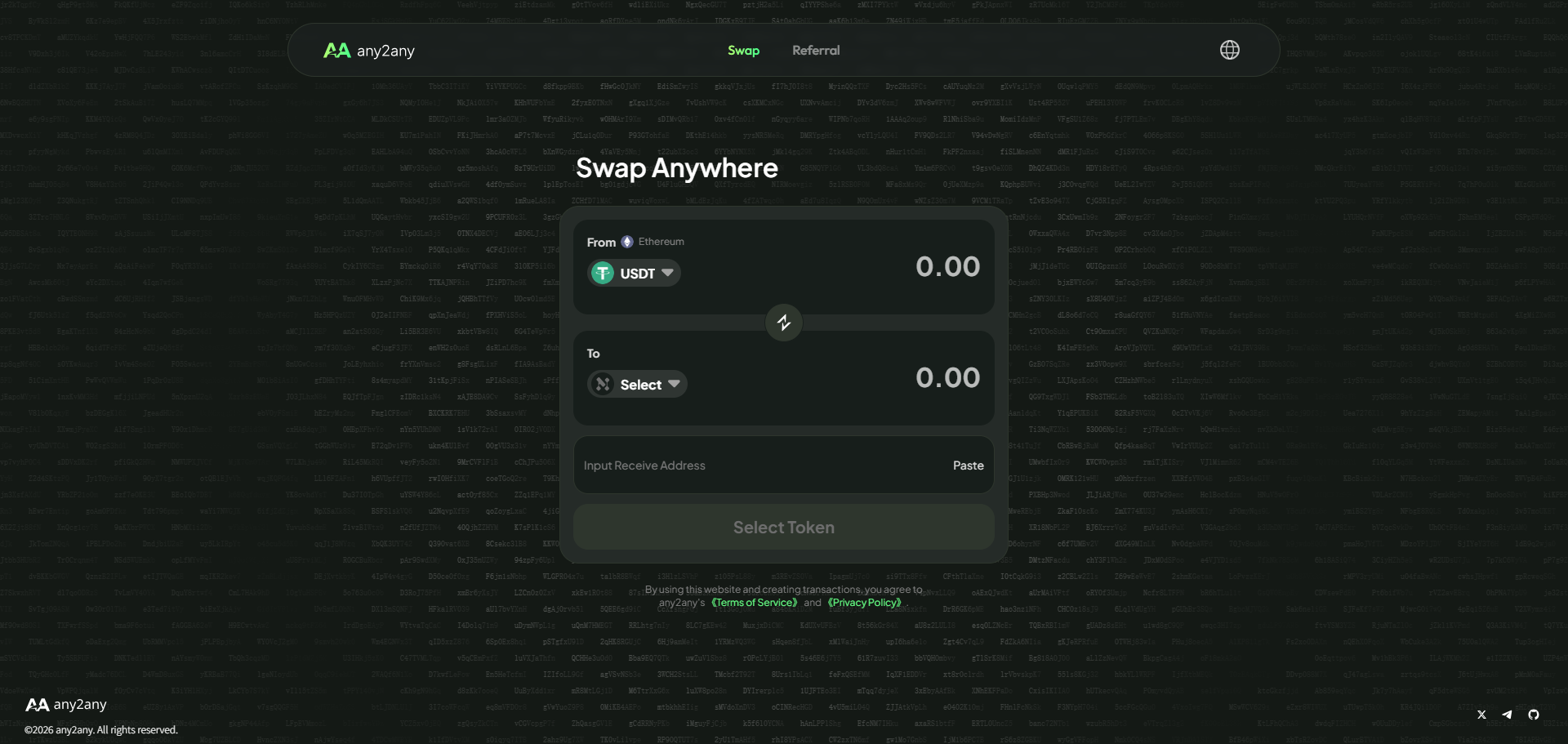
If you want to explore aggregated routing with an experience oriented toward modern interfaces and AI-assisted workflows, you can try Any2Any—built to emphasize broad token access, AI agent–friendly interaction, and a non-custodial, security-conscious approach to swapping. Always verify transaction details in your wallet before you sign.
Educational content only; not financial advice. Crypto assets are volatile and smart-contract interactions carry risk.


